How-To · 7 min read
Designing a Small-Kitchen Layout That Doesn't Feel Small
Five rules from the small-kitchen orders we've built. Hint: the fridge is never where you think it should go.
Priya Shankar
Small-Space Specialist · Published February 20, 2026
A small kitchen isn't a big-kitchen-minus-the-space. It's a different design problem that rewards different rules.
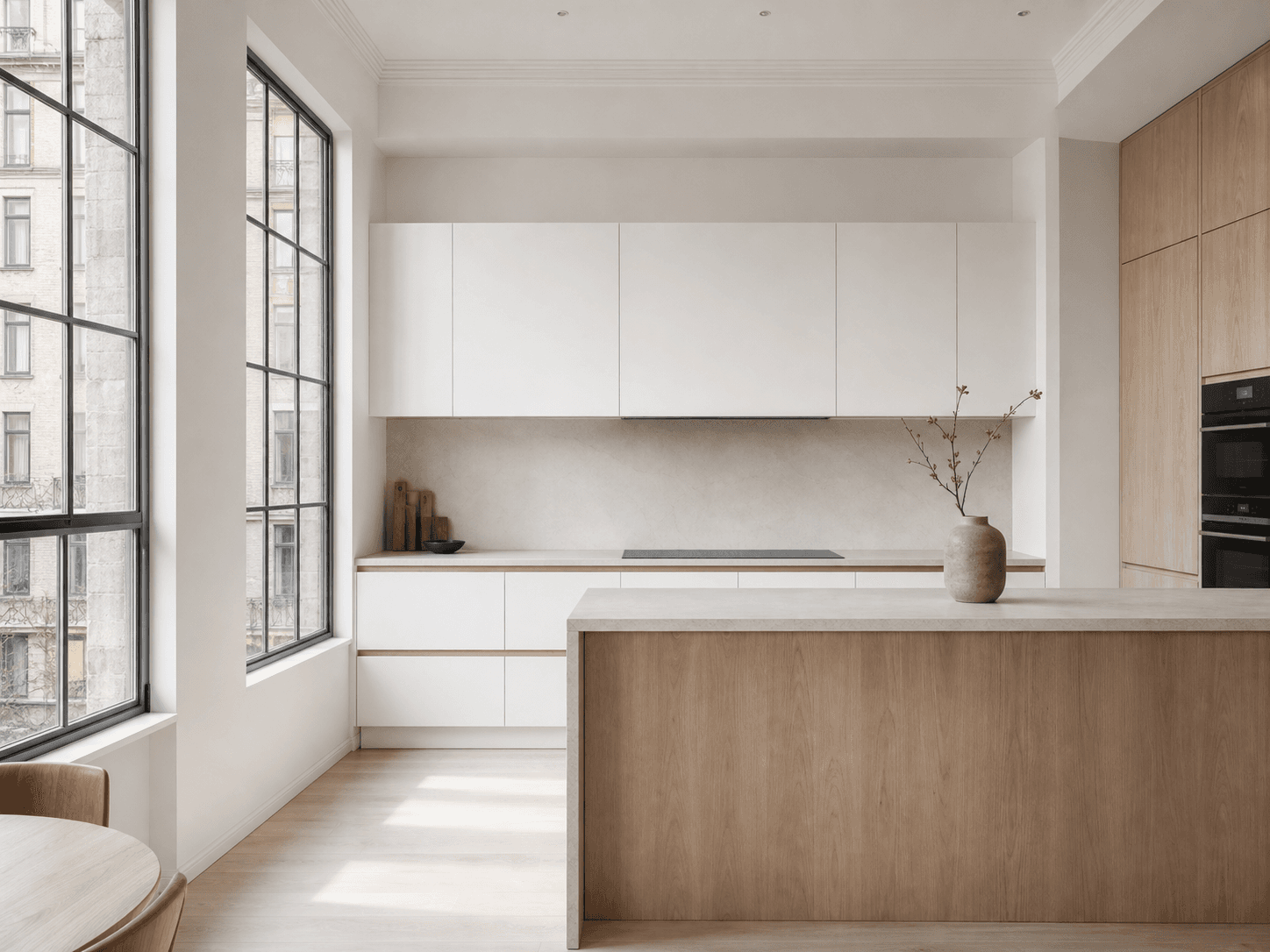
Rule 1: Prioritize counter over cabinet. In a small kitchen, every square foot of counter is worth three square feet of upper-cabinet storage. Reduce the number of wall cabinets and add a second base run instead. The room will feel bigger even though you technically have less storage.
Rule 2: Put the fridge at the far end of the run. Fridges are visually heavy. If you walk into the kitchen and immediately see a refrigerator, the room feels smaller than it is. Position the fridge so it's perpendicular to your line of sight when you enter.
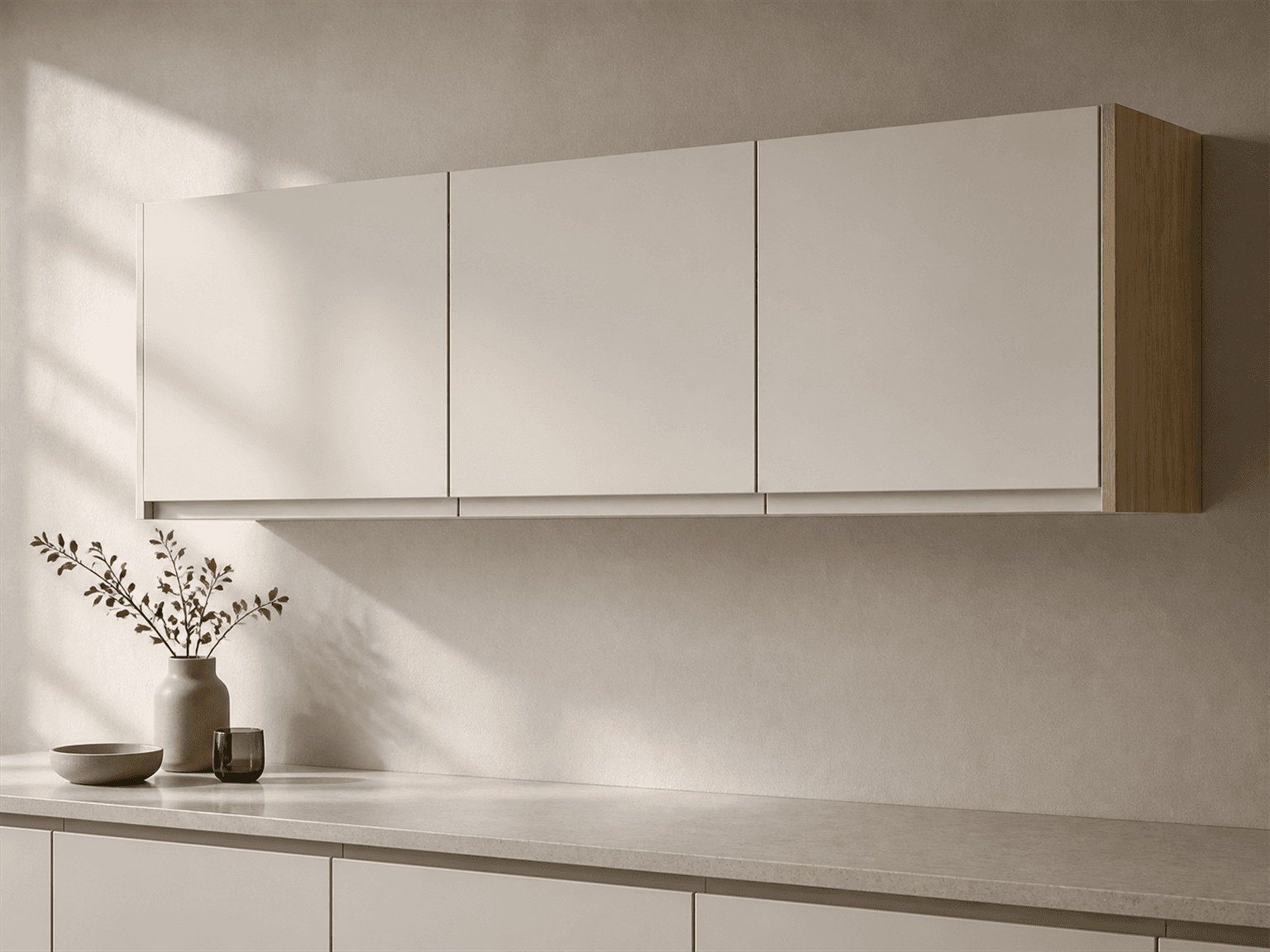
Rule 3: One appliance garage. Every small kitchen has a tangle of toasters, blenders, and coffee machines. One under-cabinet appliance garage (our open-shelf-wall unit works well for this) collects them and hides them. The counter becomes usable again.
Rule 4: Cabinets go to the ceiling. Do not leave a 12-inch soffit above 84-inch cabinets. Either buy 96-inch cabinets or close the soffit out with matching trim. The top-of-cabinet shelf always becomes a dust collector.
Rule 5: Use the corners. A corner lazy-susan base reclaims 9 cubic feet of storage that would otherwise be unreachable. In a small kitchen, 9 cubic feet is a meaningful percentage of your total storage.